Vitamins vs. Whole Foods: What’s the Difference?

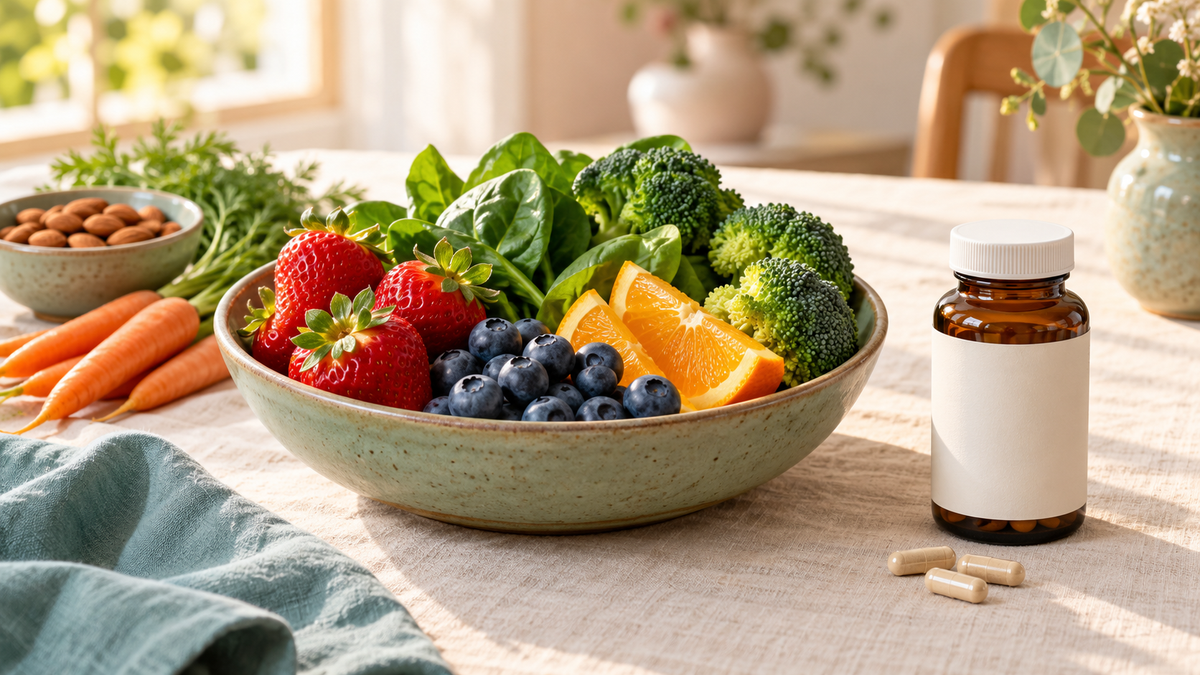
Have you ever stood in the vitamin aisle wondering whether you need another bottle—or just a simpler plan for taking care of yourself?
When you’ve spent years looking after everyone else, your own meals can become an afterthought. Then the advice starts piling up: take this, eat that, buy the newest supplement. Goodness, taking care of ourselves shouldn’t require a second career in label reading.
Let’s make the vitamins vs. whole foods conversation a little easier to understand.
Partner disclosure: I’m a Juice Plus+ partner. If you purchase through my partner link, I may earn a commission.
First, vitamins are in food, too
When people say “vitamins,” they often mean supplements. But vitamins are nutrients found in foods as well. The useful comparison is between vitamin supplements, the foods we eat, and products made with food-derived ingredients.
Those are three different things—not interchangeable versions of the same thing.
What does a multivitamin offer?
A multivitamin supplies a combination of vitamins and minerals. Formulas and amounts vary, so the label matters. Supplements can help when someone isn’t getting enough of particular nutrients, but they don’t replace a varied diet. [1]
Think of your question this way: “What nutritional need am I trying to meet?” That gives you a better starting point than choosing the bottle with the longest list of promises.
What do whole foods offer?
Food brings more to the table than isolated vitamins and minerals. Plant foods can also supply fiber and other beneficial components. [1] Vegetables, for example, provide nutrients such as folate, potassium, and vitamins A and C. [2]
And everyday food can be wonderfully ordinary. Frozen vegetables and canned options count, too. You don’t need a refrigerator that looks like a magazine photo. [2]
Here are a few easy additions to try:
- Add berries or sliced fruit to breakfast.
- Stir frozen vegetables into soup.
- Add rinsed canned beans to a salad.
- Keep a piece of fruit where you’ll actually notice it.
Choose something you enjoy enough to repeat. Buying spinach with good intentions is easy. Remembering it before it becomes a science project is the real skill.
Where do whole-food-based supplements fit?
Food-based supplements use ingredients derived from foods, sometimes dried or concentrated. That doesn’t make a capsule equivalent to eating the original foods or guarantee it will meet a specific nutrient need.
Juice Plus+ describes its products as a way to complement a balanced eating routine with food-derived ingredients. Its own comparison article also makes clear that supplements aren’t replacements for whole foods. [3]
As a longtime Juice Plus+ partner, I’m happy to help you explore the products. I also want you to understand the distinction: food comes first, and supplement choices deserve a look at the actual ingredients and amounts.
Read Juice Plus+’s explanation of multivitamins and whole-food-based supplements.
What about vitamins for women over 50?
Needs can change with age. NIH advises adults over 50 to get recommended vitamin B12 from fortified foods and/or supplements because absorption of naturally occurring B12 from food may decline. [1]
Before adding products, ask your healthcare professional which nutrients you need and whether your existing supplements overlap. More is not automatically better; excessive amounts of some nutrients can be harmful. [1]
Start with one choice that fits your life
You don’t have to overhaul your pantry today. Pick one meal and ask, “What could I add that would make this a little more nourishing?”
For me, the most useful next step is one you can picture doing on an ordinary Tuesday—not just on your most organized day.
Save this guide for your next grocery trip or supplement conversation. Taking care of yourself deserves a place on the list, too.
This article is for general education and does not replace individual medical advice. Talk with your healthcare professional before changing your supplement routine.