High Protein Foods List: A Simple Guide for Women Over 50
Wondering how much protein you need after 50? Discover 30 everyday protein-rich foods, simple meal ideas, and practical ways to support strength and healthy aging.

Have you ever noticed that the older we get, the more attention we need to pay to things we never gave much thought to before? Protein is one of those things!
For years, we may have focused on feeding our families, planning meals, and making sure everyone else was getting enough to eat. But somewhere along the way, it's easy to forget that our own nutritional needs are changing, too.
As women move through their 50s, 60s, and beyond, maintaining muscle and strength becomes increasingly important. And while strength training plays a big role, getting enough protein gives our bodies the building blocks they need to maintain and repair muscle.
The good news? You don't need to eat enormous steaks, drink protein shakes all day, or completely change the way you eat.
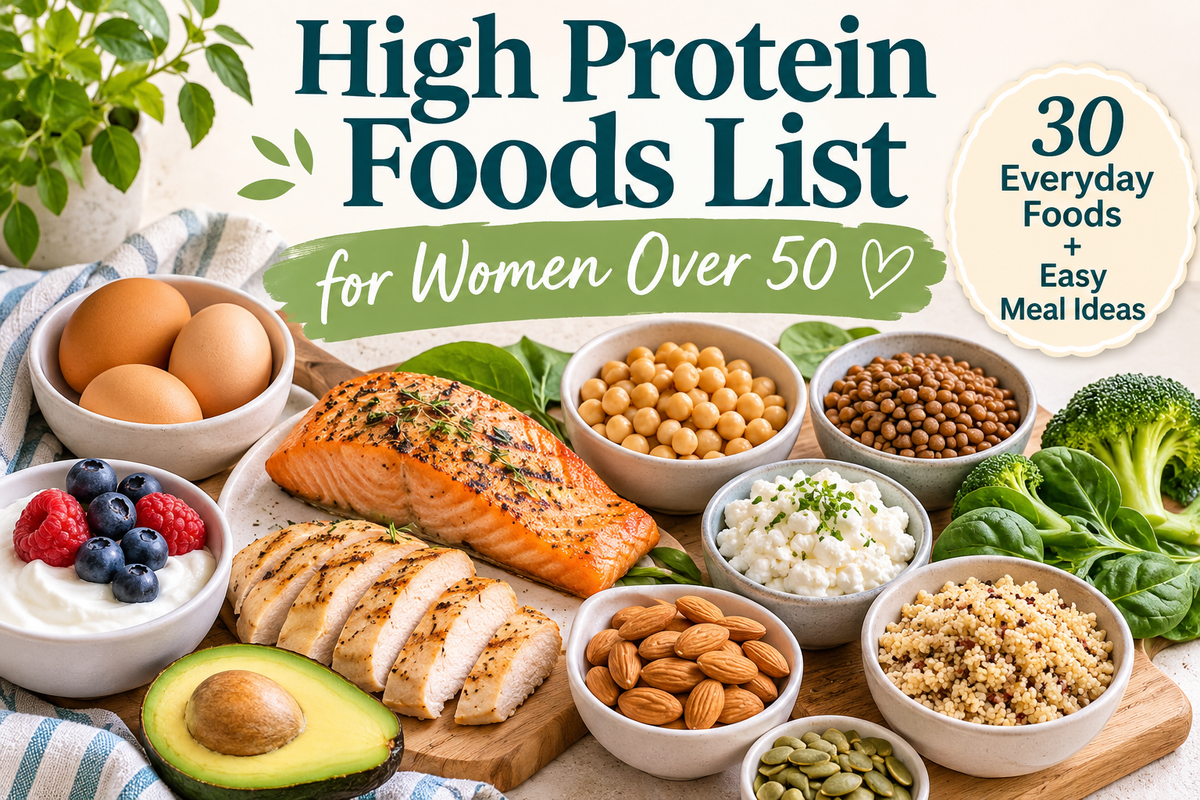
Everyday foods like eggs, Greek yogurt, beans, lentils, chicken, and even some vegetables can help you meet your protein needs.
In this simple guide, we'll explore why protein matters after 50, how much you may need, and which high-protein foods are worth adding to your grocery list. You'll also find practical ideas for including more protein in meals and snacks without making healthy eating complicated.
Because taking care of ourselves doesn't have to be difficult. Sometimes, it starts with something as simple as what we put on our plates.
Why Protein Matters More for Women Over 50
When we think about healthy aging, we often focus on keeping our hearts healthy, staying active, and eating plenty of fruits and vegetables. But there's something else that deserves our attention: maintaining our muscle.
Beginning around age 30, adults gradually lose muscle mass, and that loss can become more noticeable as we get older, especially if we're not physically active.
This age-related loss of muscle mass and strength is sometimes called sarcopenia. While some changes are a natural part of aging, there are things we can do to help preserve our strength and independence.
And that's where protein comes in!
Protein Helps Maintain Muscle and Strength
Protein provides amino acids, the building blocks our bodies use to build and repair muscle tissue.
As we age, our muscles may become less responsive to smaller amounts of dietary protein. That means getting enough protein throughout the day becomes especially important.
Protein also supports:
- Muscle maintenance and repair: Helping your body recover from everyday activities and exercise.
- Healthy bones: Working alongside calcium, vitamin D, and physical activity to support bone health.
- Immune function: Providing building blocks for antibodies and other proteins involved in immune defenses.
- Everyday strength: Supporting the muscles we rely on for walking, climbing stairs, carrying groceries, and enjoying our favorite activities.
Protein and Strength Training Make a Great Team
Here's something worth remembering: Eating more protein alone isn't the whole answer.
Our muscles also need a reason to stay strong!
Activities like lifting weights, using resistance bands, gardening, and carrying groceries challenge our muscles in different ways. Structured strength training is particularly helpful for maintaining muscle as we age.
When we combine regular resistance exercise with adequate protein, we give our bodies two important tools for supporting muscle health.
And no, you don't have to become a bodybuilder!
Even starting with simple, age-appropriate strength exercises can make a difference over time.
The goal isn't to look 25 again. It's to stay strong enough to enjoy life at 55, 65, 75, and beyond.
How Much Protein Do Women Over 50 Really Need?
You might be wondering, "Am I getting enough protein?"
It's a good question, especially since our nutritional needs can change as we get older.
The Recommended Dietary Allowance (RDA) for protein for generally healthy adults is 0.8 grams per kilogram of body weight per day. That's approximately 0.36 grams per pound.
Research suggests that many healthy older adults, particularly those over 65, may benefit from approximately 1.0 to 1.2 grams of protein per kilogram of body weight daily to support muscle maintenance and physical function. This is an expert-recommended range rather than a universal requirement for every woman over 50.
Your ideal amount depends on factors such as your age, activity level, overall health, and medical needs.
What Does That Look Like in Everyday Life?
Let's say you weigh 150 pounds.
The standard adult protein recommendation would be approximately 55 grams per day.
However, some experts suggest that healthy older adults may benefit from approximately 68–82 grams of protein daily, depending on their health and activity level.
That's not as complicated as it sounds!
By including protein-rich foods at breakfast, lunch, and dinner, along with an occasional protein-rich snack, you can work toward meeting your daily needs without counting every bite.
Spread Your Protein Throughout the Day
One simple habit that can help is including a protein-rich food at every meal instead of saving most of your protein for dinner.
Here are a few easy ideas:
- Breakfast: Greek yogurt topped with berries and chopped nuts.
- Lunch: Chicken or chickpea salad with whole-grain crackers.
- Dinner: Baked salmon, roasted vegetables, and quinoa.
- Snack: Cottage cheese, edamame, or a hard-boiled egg.
You don't need to completely change the way you eat. Start by looking at your usual meals and asking yourself, "Where could I add a little more protein?"
Sometimes a small change, like adding Greek yogurt to breakfast or beans to a lunchtime salad, is a great place to begin.
A Quick Note About Individual Protein Needs
While adequate protein is important for healthy aging, more isn't always better.
If you have chronic kidney disease or have been advised to limit protein, your needs may be different. Higher-protein recommendations aren't appropriate for everyone, and protein needs can vary depending on kidney function and treatment.
Talk with your healthcare professional or a registered dietitian before making significant changes to your protein intake if you have a medical condition that affects your nutritional needs.
Remember: The goal isn't to eat as much protein as possible. It's to get the right amount for your body while enjoying a variety of nutritious foods.
High Protein Foods List: 30 Everyday Foods to Add to Your Grocery List
Getting enough protein doesn't have to mean eating chicken at every meal or spending a fortune on specialty foods.
In fact, some of the best protein sources may already be sitting in your refrigerator or pantry!
Whether you enjoy meat, fish, dairy, or plant-based foods, there are plenty of delicious ways to add protein to your meals.
Here's a simple list of 30 protein-rich foods, along with their approximate protein content per serving.
Chicken, Meat, Fish, and Eggs
These foods provide complete protein, meaning they contain all nine essential amino acids your body needs.
- Chicken breast: 26 grams per 3 ounces, cooked
- Turkey breast: 26 grams per 3 ounces, cooked
- Lean ground beef: 22 grams per 3 ounces, cooked
- Pork tenderloin: 22 grams per 3 ounces, cooked
- Salmon: 22 grams per 3 ounces, cooked
- Canned tuna: 20 grams per 3 ounces, drained
- Shrimp: 20 grams per 3 ounces, cooked
- Sardines: 21 grams per 3 ounces, drained
- Eggs: 6 grams per large egg
Simple tip: Cook a little extra chicken or salmon at dinner and use the leftovers in a salad, wrap, or grain bowl the next day.
Dairy and Dairy Alternatives
Dairy foods can be convenient sources of protein, and many also provide calcium, which is important for bone health.
- Plain Greek yogurt: 17 grams per 6 ounces
- Cottage cheese: 12 grams per ½ cup
- Milk: 8 grams per cup
- Cheddar cheese: 7 grams per ounce
- Part-skim mozzarella: 7 grams per ounce
- Plain skyr yogurt: 15 grams per 5.3-ounce container
Simple tip: Choose plain Greek yogurt and add your own fruit, cinnamon, or nuts. It's an easy way to enjoy a protein-rich breakfast or snack.
If you avoid dairy, fortified soy milk is another option that typically provides around 7–8 grams of protein per cup.
Beans, Lentils, and Soy Foods
Plant-based foods deserve a place on our high-protein foods list, too!
Many also provide fiber, which supports digestive health and helps make meals satisfying.
- Cooked lentils: 9 grams per ½ cup
- Cooked chickpeas: 7 grams per ½ cup
- Cooked black beans: 7–8 grams per ½ cup
- Cooked kidney beans: 7–8 grams per ½ cup
- Cooked edamame: 9 grams per ½ cup
- Firm tofu: Approximately 10–22 grams per ½ cup, depending on the brand and type.
- Tempeh: 16 grams per 3 ounces
Simple tip: Add lentils to soup, chickpeas to salads, or black beans to tacos. These are affordable ways to include more plant protein without making an entirely separate meal.
Nuts, Seeds, and Whole Grains
These foods may not provide as much protein per serving as chicken or fish, but they can make valuable contributions to your daily total.
- Pumpkin seeds: 8 grams per ounce
- Peanuts: 7 grams per ounce
- Almonds: 6 grams per ounce
- Peanut butter: 7 grams per 2 tablespoons
- Chia seeds: 5 grams per 2 tablespoons
- Hemp hearts: 10 grams per 3 tablespoons
- Cooked quinoa: 8 grams per cup
- Cooked oatmeal: 6 grams per cup
Simple tip: Sprinkle hemp hearts or pumpkin seeds over yogurt, add chia seeds to oatmeal, or spread peanut butter on whole-grain toast.
These small additions can help boost the protein content of foods you already enjoy.
A Few Things to Remember
Protein amounts are approximate and can vary depending on the brand, preparation method, and serving size.
You don't need to eat every food on this list or choose only the highest-protein options.
Instead, aim for variety. Combining different protein sources with vegetables, fruits, whole grains, and healthy fats helps create a balanced eating pattern.
And remember, the best protein choices are the ones you enjoy, can afford, and will actually eat regularly.
Healthy eating should fit your life, not the other way around!
Easy Ways to Add More Protein to Everyday Meals
Knowing which foods contain protein is helpful, but figuring out how to include them in your everyday meals is where the real magic happens.
The good news is that you don't need a complicated meal plan, expensive ingredients, or hours in the kitchen.
Sometimes, it's as simple as adding an egg to breakfast, tossing chickpeas into a salad, or keeping a container of Greek yogurt in the refrigerator.
Here are a few easy ideas to get you started.
Start Your Morning With Protein
Breakfast is one meal where protein can easily get overlooked.
Toast, cereal, and fruit are convenient choices, but adding a protein-rich food can help make your breakfast more balanced and satisfying.
Try these simple combinations:
- Greek yogurt bowl: Plain Greek yogurt topped with berries, chopped almonds, and a sprinkle of chia seeds.
- Eggs and whole-grain toast: Two scrambled eggs served with whole-grain toast and sliced avocado.
- Protein oatmeal: Cook oatmeal with milk or fortified soy milk, then stir in peanut butter or hemp hearts.
- Cottage cheese and fruit: Pair cottage cheese with pineapple, peaches, or fresh berries.
You don't have to give up your favorite breakfast. Just look for an easy way to add a little protein.
Make Lunch More Satisfying
Lunch doesn't need to be fancy to provide a good source of protein.
A few simple ingredients can turn an ordinary salad, sandwich, or bowl of soup into a satisfying meal.
Here are some ideas:
- Chicken and avocado wrap: Use leftover chicken, fresh greens, avocado, and a whole-grain tortilla.
- Chickpea salad: Combine chickpeas, chopped cucumber, tomatoes, olive oil, and lemon juice.
- Tuna salad sandwich: Mix canned tuna with plain Greek yogurt, celery, and seasonings. Serve on whole-grain bread.
- Lentil soup: Make a batch of lentil and vegetable soup to enjoy throughout the week.
Time-saving tip: When you're preparing dinner, cook a little extra protein to use for lunch the next day. One less meal to think about!
Build a Balanced, Protein-Rich Dinner
Dinner is often the easiest meal for including protein, but variety helps keep things interesting.
Try building your plate around a protein source, adding colorful vegetables, and including a whole grain or other satisfying carbohydrate.
Some easy combinations include:
- Baked salmon with roasted broccoli and quinoa.
- Grilled chicken with sweet potatoes and green beans.
- Turkey and black bean chili topped with avocado.
- Tofu stir-fry with colorful vegetables and brown rice.
- Lean beef and vegetable skillet served with roasted potatoes.
You don't need to prepare separate meals for yourself and your family. These are everyday dishes everyone can enjoy.
Keep Protein-Rich Snacks Handy
Snacks can be another opportunity to include protein, especially on busy days when meals don't go quite as planned.
A few simple choices include:
- A hard-boiled egg with fresh fruit.
- Cottage cheese with berries.
- Greek yogurt with cinnamon.
- Apple slices with peanut butter.
- Roasted edamame.
- A small handful of almonds or pumpkin seeds.
Keeping a few convenient options available makes it easier to choose something nourishing when hunger strikes.
Five Small Changes That Can Make a Difference
If adding more protein feels overwhelming, start with just one of these habits:
- Add an egg or Greek yogurt to your usual breakfast.
- Include beans or lentils in a soup or salad.
- Keep canned tuna or salmon in the pantry for quick meals.
- Sprinkle hemp hearts or pumpkin seeds over oatmeal or yogurt.
- Prepare an extra serving of protein at dinner for tomorrow's lunch.
You don't have to change everything at once.
Choose one small step that fits your life, practice it for a few days, and build from there.
That's how healthy habits become part of your everyday routine instead of another item on your to-do list.
A Simple Day of High-Protein Meals for Women Over 50
Sometimes the easiest way to understand how much protein you're eating is to see what it looks like on a plate.
You don't need to eat enormous portions of meat or drink protein shakes at every meal. With a little planning, everyday foods can help you meet your protein needs.
Here's an example of a simple day that provides approximately 80 grams of protein.
Breakfast: Greek Yogurt and Berry Bowl
Approximately 20 grams of protein
- ¾ cup plain Greek yogurt — 17 grams
- 1 tablespoon chopped almonds — 2 grams
- ½ cup fresh berries — 1 gram
Add a sprinkle of cinnamon for extra flavor.
Lunch: Chicken and Avocado Wrap
Approximately 27 grams of protein
- 3 ounces cooked chicken breast — 26 grams
- Lettuce, tomato, and avocado — approximately 1 gram
- Whole-grain tortilla — additional protein varies by brand
Roll everything together for a quick, satisfying lunch. Leftover chicken works beautifully here!
Dinner: Salmon With Quinoa and Vegetables
Approximately 28 grams of protein
- 3 ounces baked salmon — 22 grams
- ½ cup cooked quinoa — 4 grams
- 1 cup roasted broccoli — 2 grams
Season the salmon with lemon, garlic, and your favorite herbs. Serve with quinoa and colorful vegetables.
Snack: A Hard-Boiled Egg
Approximately 6 grams of protein
Enjoy one hard-boiled egg with a piece of fresh fruit for an easy afternoon snack.
Your Approximate Daily Protein Total
80–90 grams of protein for the day, depending on portions and brands.
And that's without counting all the small amounts of protein that may come from other ingredients throughout the day!
Remember, this is just an example, not a meal plan everyone needs to follow. Your protein needs may be higher or lower depending on your body size, activity level, and overall health.
If you have kidney disease or another condition that affects your protein needs, ask your healthcare professional what amount is appropriate for you.
Make It Work for Your Life
The important thing isn't to follow this exact menu.
It's to notice how including a protein source at each meal can help you work toward your daily needs.
Maybe you prefer eggs for breakfast, lentil soup for lunch, or tofu instead of salmon at dinner. That's perfectly fine!
Healthy eating doesn't have to be perfect. It just needs to be practical enough that you can keep doing it.
Want to Make Eating Enough Protein Even Easier?
We've covered quite a bit about protein, haven't we?
From understanding how much you may need to discovering everyday foods that can help you reach your goals, I hope you're beginning to see that eating enough protein doesn't have to be complicated.
But sometimes it's nice to have a little something you can keep handy, especially when you're planning meals or making your grocery list.
That's why I created the High Protein Foods Guide for Women Over 50.
Inside, you'll find helpful information about protein, a printable food list, easy meal ideas, and practical tips for making protein part of your everyday routine.
It's a resource you can come back to whenever you need a little inspiration.
Ready to make protein planning simpler?
Get your copy of the High Protein Foods Guide and keep it handy for your next grocery trip.
Because taking care of yourself should feel doable, one meal and one small step at a time.
Small Changes Today, Stronger Tomorrows
Getting enough protein is one of the practical ways we can support our health and strength as we get older.
And the wonderful thing is that it doesn't require a complete overhaul of your kitchen or your lifestyle.
Start with the foods you already enjoy. Add a little protein to breakfast, try a new plant-based option, or keep a few convenient protein-rich snacks available.
Pair those choices with regular movement and strength-building activities, and you're taking meaningful steps toward maintaining your strength and independence.
After spending so many years making sure everyone else was taken care of, it's worth remembering that your health deserves a place on the priority list, too.
And you don't have to figure everything out alone.
If you enjoy simple wellness tips, healthy recipes, and encouragement from women who are also working on taking better care of themselves, I'd love to invite you to join our Facebook community, Healthy Living 🍎 Simplified.
It's a place to share ideas, ask questions, and celebrate those little victories that add up over time.
Here's to staying strong, feeling good, and making healthy living a little simpler—at every age!
Sources & Further Reading
Want to learn more about protein and healthy aging? Here are some trusted resources:
- USDA FoodData Central — Nutritional information, including protein amounts in everyday foods.
https://fdc.nal.usda.gov/ - National Institute on Aging — Healthy Eating as You Age — Guidance on nutrition and healthy eating for older adults.
https://www.nia.nih.gov/health/healthy-eating-nutrition-and-diet - PROT-AGE Study Group — Evidence-Based Recommendations for Optimal Dietary Protein Intake in Older People — Research discussing protein recommendations for older adults.
https://doi.org/10.1016/j.jamda.2013.05.021